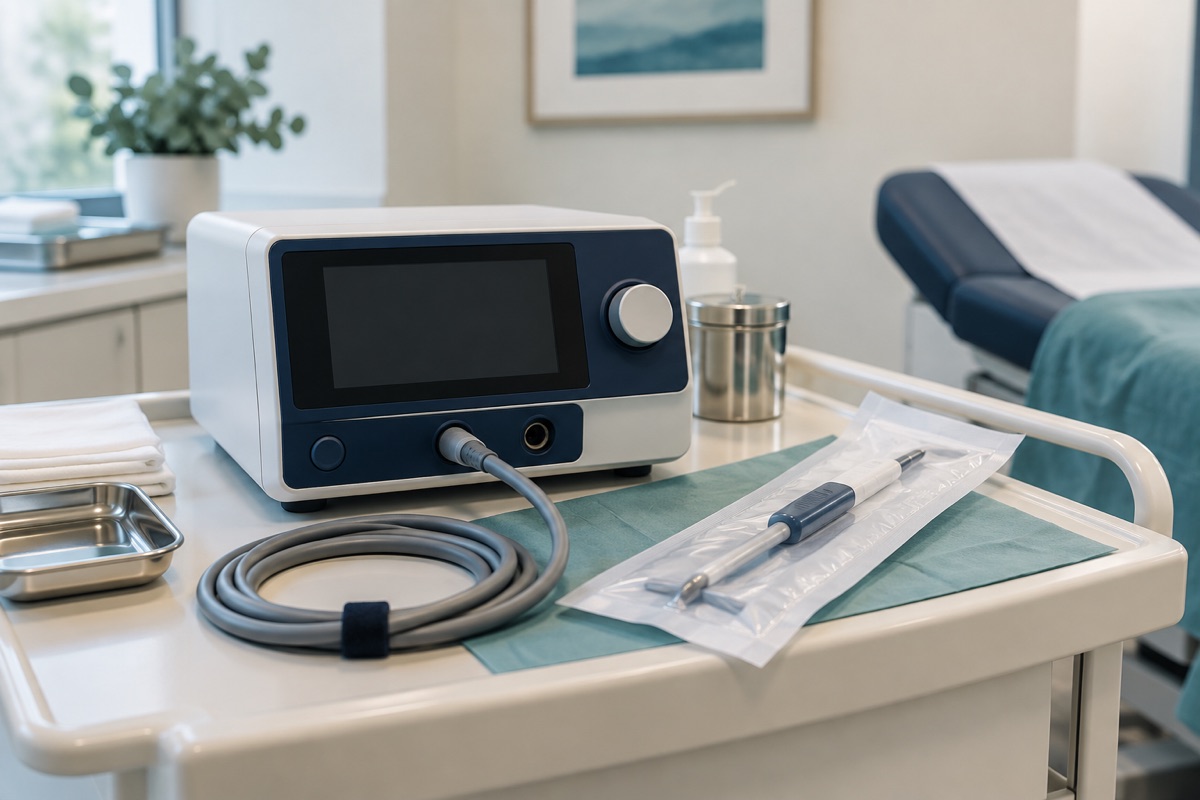
A nerve block temporarily numbs a pain pathway; RFA uses heat to treat selected nerves. RFA may reduce knee pain, but reviews disagree about the size and durability of benefit. [1][2][3]
02
Who might it suit?
For: Selected knee pain after pain-specialist assessment.
Not for: A permanent fix or a way to repair cartilage. Hip use needs review.
03
Limits and important cautions
A 2025 sham-focused review was less favorable than a broader 2026 review. Technique, comparators, and study quality differ; neither procedure repairs the joint.
What happens, how long, and what could it cost?
What happens
A specialist assesses the pain source; a nerve block and RFA are distinct procedures.
When might I notice a change?
A reliable personal timeline cannot be predicted from the evidence reviewed here. Agree on a review date before starting.
How long might benefit last?
Relief may be temporary; durability varies across techniques and studies.
Repeat treatment
Discuss the response to any block, the expected benefit of RFA, and criteria for repeating it.
Activity and recovery
Ask who provides follow-up, what symptoms need urgent attention, and what restrictions apply to you.
Ask for a complete estimate
Consultation, diagnostic block if used, ablation, facility fees, and follow-up.
Use this as a consultation guide. A timeline is not a guarantee; the evidence and FDA sections below remain part of the decision.
Includes randomized and observational studies; more favorable results for larger-lesion techniques. Pooled response rates are not placebo-adjusted treatment effects.
2019 guideline, published in 2020. Recommendations vary by joint; it predates many newer trials.
Editorial synthesis · reviewed September 19, 2026. These are selected decision-relevant references, not an exhaustive systematic review or a new formal evidence grade. FDA status and coverage are assessed separately.
FDA status
Device clearance · selected knee pain
COOLIEF has FDA 510(k) clearance for genicular nerve lesions in selected patients with chronic knee pain, including labeled selection criteria. This is device clearance, not blanket approval of every ablation or nerve-block technique. Local anesthetics used for blocks have their own labeling.
Site summary of FDA information · reviewed September 19, 2026. Refer to current product labeling. This is not an FDA endorsement of this site.What do professional guidelines say?
AAOS: Limited recommendation: denervation may reduce knee pain and improve function.
ACR: Conditionally recommends radiofrequency ablation for knee OA.
Will Medicare cover it?
UNSURE for your plan. Coverage varies by local policy and technique; obtain written confirmation.
Compare nonsurgical knee arthritis care, injection choices, and selected surgical alternatives—with evidence, limits, and questions for your clinician.